Running an installment (qist) business well starts with good records. The qist (installment) business is one of the most common ways people in Pakistan buy motorcycles, appliances, mobile phones, furniture and other big-ticket items. For the seller, it can be a steady and profitable business. It can also be a trap: a business that looks successful on paper, with lots of sales, while the money is stuck in the market and never fully comes back.
This guide covers the fundamentals of running an installment business profitably: how to structure plans, how to choose customers, what to document, how to manage recovery and how to keep records you can trust. It is general guidance, not legal or financial advice, so speak to a qualified adviser about the rules and agreements that apply to your business.

Understand where the profit comes from
In a cash sale, profit is made at the counter. In a qist sale, profit is made only when the final instalment is collected. Until then, you have handed over goods worth money and are waiting to be paid back over months. That means three things matter more than in ordinary retail:
- How you price the installment plan.
- Who you sell to.
- How well you collect.
A business that sells a lot but collects poorly will run out of cash, even if every sale “made a profit” on paper.
1. Design clear installment plans
A typical plan has a total price, an advance (down payment), a number of instalments and a monthly amount. Keep plans simple and consistent, so customers understand them and staff do not invent terms on the spot.
- Advance: a meaningful advance reduces your risk and shows the customer’s commitment.
- Duration: longer plans mean lower monthly payments but more risk and more money tied up. Many sellers offer a few standard durations.
- Total price: the installment price should cover the product cost, your margin, the cost of your money being tied up, collection costs and an allowance for customers who pay late or not at all.
Write the plan down and give the customer a copy. Ambiguity causes most disputes.
2. Screen customers carefully
The best way to reduce recovery problems is to sell to the right customers. Established qist sellers usually verify identity, address and source of income, and many ask for a guarantor. Visiting the customer’s home or workplace, or speaking to references, is common practice. Be consistent: apply the same checks to everyone so decisions are fair and defendable.
It is also worth keeping a record of customers who have paid well in the past. Repeat customers with a good history are often the most profitable part of a qist business.
3. Document everything
A clear agreement protects both you and the customer. It should state the product, total price, advance, instalment amount, due dates and what happens if payments are late. Keep copies of identity documents and any guarantor details, and store them securely. Have the agreement reviewed by a legal adviser so it is appropriate for your business.
Every payment should be recorded with a date and amount, and the customer should receive a receipt. A complete payment history ends most arguments before they start.
4. Make paying easy
Customers are more likely to pay on time when it is convenient. Be clear about where and how they can pay, and confirm every payment promptly. A friendly reminder a few days before the due date is often more effective than chasing after it is missed.
5. Build a recovery routine
Recovery should be a daily or weekly process, not a crisis. A simple routine:
- Before the due date: send a polite reminder.
- On the due date: record payments received and list those not received.
- A few days late: call the customer and agree a date.
- Persistently late: escalate according to your agreement, involving the guarantor if appropriate.
The key is knowing, every day, exactly who is due and who is overdue. That is very hard with a paper register once you have more than a few dozen active accounts.
6. Watch your cash flow
Because qist sales tie up money, your cash position matters as much as your sales. Track three numbers regularly: total amount sold on installments, total collected, and total still receivable. If receivables keep growing faster than collections, slow down new qist sales, tighten screening or increase the advance.
7. Separate cash and qist, but keep them in one system
Most installment sellers also sell for cash. It is important to see the two separately, because they have very different risk and cash-flow profiles, but they share the same stock and customers. Keeping both in one system avoids the common problem of stock records not matching qist records.
8. Keep reliable records
Many qist businesses start with a register per customer or a thick ledger book. This works at small scale, but it breaks down as you grow: pages get lost, entries are missed, and answering “who is overdue this week?” takes hours. Spreadsheets help, but they rely on someone updating them correctly every day.
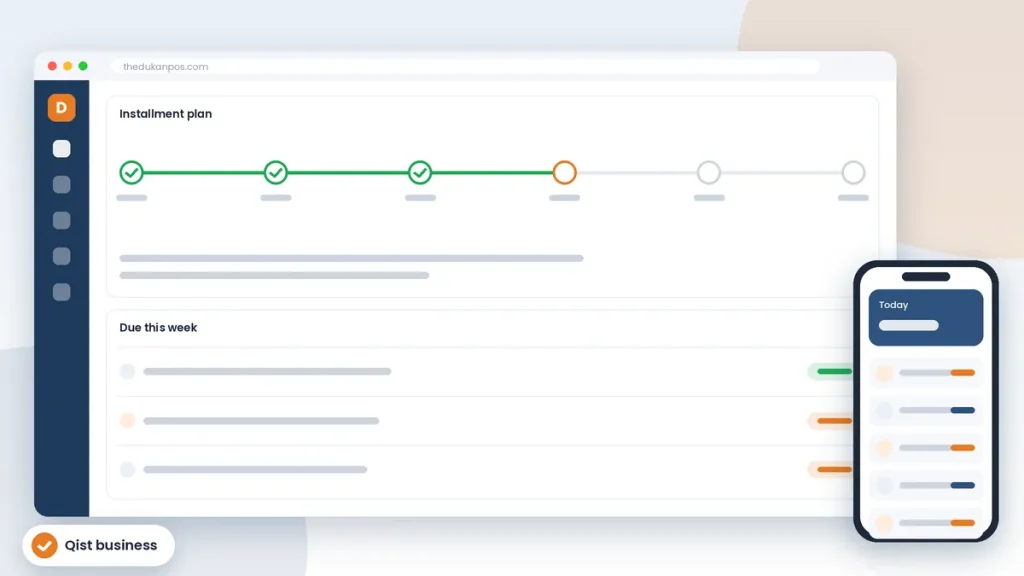
Installment software keeps the schedule for every plan, records each payment and shows due and overdue accounts automatically. theDukanPOS includes an Installments add-on with installment tracking, which works alongside its retail POS, inventory and reports. You can read about it in Urdu too: قسط سافٹ ویئر.
9. Train your team
Your sales staff and recovery staff need to follow the same rules: the same plans, the same screening, the same documentation. Write down your process and make sure everyone uses it. Give staff their own logins in your software so you can see who recorded what.
10. Review monthly
Once a month, review: how many new qist sales you made, how much was collected, which accounts are overdue and for how long, and which products or plans have the most late payments. Use this to adjust your plans and screening.
11. Handle defaults fairly and lawfully
Even with good screening, some customers will not pay. Decide in advance, and write into your agreement, how you will handle persistent non-payment. Keep every step respectful and within the law, and keep notes of each conversation and promise. A fair, documented process protects your reputation, which matters in a business that depends on word of mouth.
12. Price risk into product selection
Not every product is equally suitable for installments. Items that hold their value and are essential to the customer, such as appliances or a motorcycle used for work, are often paid more reliably than luxury items. Watch which products and plans have the most late payments in your own records, and adjust what you offer on qist accordingly.
Common mistakes to avoid
- Selling on qist without a meaningful advance to win a sale.
- Changing terms for individual customers without writing it down.
- Recording payments late or not issuing receipts.
- Not following up on the first missed payment.
- Measuring success by sales instead of collections.
Conclusion
A qist business succeeds on discipline: clear plans, careful customer selection, complete documentation and consistent recovery. Good records make all of these easier. If you are ready to move off the register, try theDukanPOS free for 15 days.