A medical store is one of the most trusted shops in any neighbourhood. People come in worried, often with a prescription and little time, and they rely on the person behind the counter to give the right medicine at the right price. That trust is why medicine retail is regulated, and why opening a medical store in Pakistan involves more than renting a shop and buying stock.
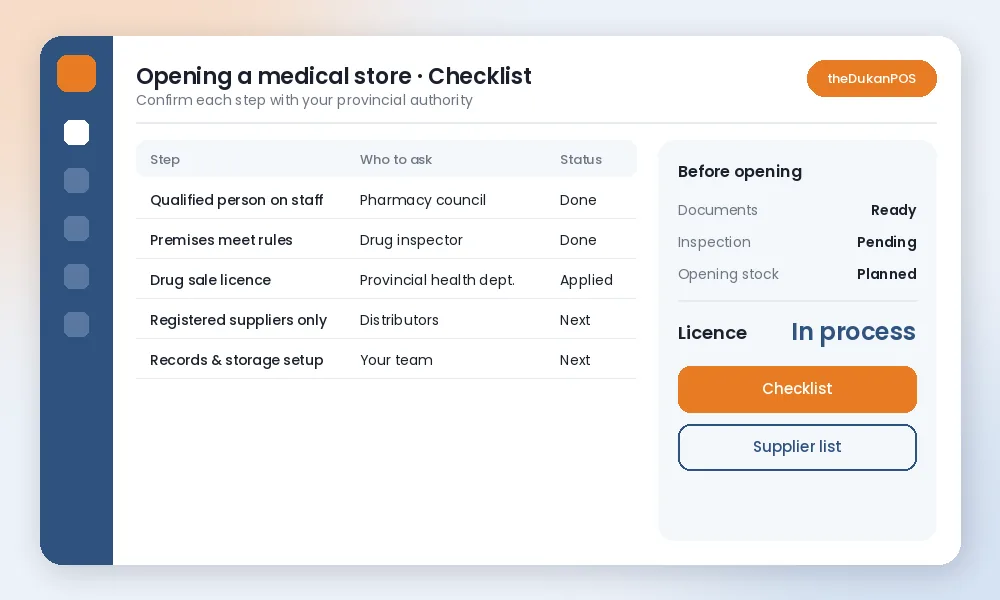
This guide gives a practical overview of the steps: the medical store licence in general terms, qualified staff, premises, suppliers, storage and day-to-day running. It is general information, not legal advice. Rules are set and enforced provincially and can change, so always confirm the current requirements with your provincial health department or district drug inspector before you invest.
How medicine retail is regulated in Pakistan
At the national level, the Drug Regulatory Authority of Pakistan (DRAP) regulates the registration, manufacture, import and pricing of medicines. The Drugs Act, 1976 is the main law. Licensing of retail sale, which covers pharmacies and medical stores, is handled by the provinces under their own drug rules, through provincial health departments and district drug inspectors. Punjab, Sindh, Khyber Pakhtunkhwa and Balochistan each have their own procedures, forms and fees.
In practice, this means the exact process depends on where your shop is. The steps below are the common building blocks; your provincial authority will tell you the specifics.
Step 1: Understand the licence categories
Provinces generally distinguish between a pharmacy, which must be run under the supervision of a registered pharmacist, and a medical store, which can be run under the supervision of a qualified person with a recognised pharmacy qualification, such as a pharmacy technician or holder of a recognised certificate, as specified in the provincial rules. Categories, names and requirements differ between provinces, so ask which category fits your plans and staffing.
Step 2: Arrange a qualified person
A licence is normally issued with a named qualified person who must actually be present and responsible for dispensing. This is not a formality. Inspectors may check that the qualified person is working at the premises. If you are not qualified yourself, you will need to employ someone who is, and their registration documents will be part of your application.
Step 3: Prepare suitable premises
Provincial rules usually set minimum standards for the premises, which may include area, cleanliness, proper shelving, protection from direct sunlight and heat, and a refrigerator for medicines that need cold storage. Some areas also have rules on distance from other pharmacies or hospitals. Confirm these before signing a lease; it is expensive to discover later that a shop does not qualify.
Step 4: Apply for the drug sale licence
The application typically goes to the provincial health department or district licensing authority, with documents such as your CNIC, proof of premises (ownership or rent agreement), details and registration of the qualified person, a site plan and the prescribed fee. An inspection of the premises is usually part of the process. Keep copies of everything you submit. Only begin selling medicines once the licence is issued, and display it as required.
Step 5: Buy only from authorised suppliers
Buy medicines from licensed distributors and keep every invoice. This protects you from counterfeit and substandard products, and inspectors may ask to see purchase records. Avoid unexplained cheap stock from unknown sources, however attractive the margin.
Step 6: Store medicines properly
- Keep medicines away from direct sunlight, heat and moisture.
- Use a dedicated refrigerator for vaccines, insulin and other cold-chain products, and check its temperature daily.
- Arrange shelves so items are easy to find and older stock is used first.
- Separate expired or damaged items clearly so they are never sold, and dispose of them as your local rules require.
Step 7: Follow dispensing rules
Prescription-only medicines should be sold only against a valid prescription, and controlled medicines are subject to strict additional rules and record-keeping. Your qualified person should know these requirements well. Train any helpers on what they may and may not sell without the qualified person’s involvement.
Step 8: Sell at the right prices
Prices of many medicines are regulated in Pakistan and printed on the pack. Sell at or below the printed retail price. Overcharging damages trust and can lead to penalties. Your margin comes mainly from the trade discount you receive from distributors and from non-medicine items such as baby care, supplements and personal care, where allowed.
Step 9: Control stock and expiry
Medicine stock is valuable, and expired stock is pure loss. Good habits matter:
- Check expiry dates when receiving stock and do not accept short-dated items unless agreed.
- Do a monthly expiry check, and return near-expiry stock to suppliers where their policy allows.
- Reorder fast-moving medicines before they run out; a customer who cannot get their regular medicine may not come back.
- Count high-value items regularly.
A POS helps with the day-to-day part: fast billing by name or barcode, stock that reduces as you sell, low-stock lists for reordering, supplier purchase records and daily sales reports. theDukanPOS provides these for pharmacies and medical stores, along with purchase and supplier management and reports. theDukanPOS also lets you record expiry dates and batch codes on stock and see what is close to expiry (see expiry date and batch code tracking). Keep your own monthly expiry checks as well.
Step 10: Keep records
Keep purchase invoices, sales records and any registers your provincial rules require, especially for controlled medicines. Good records protect you during inspections and help you understand your business: which medicines sell, what you earn and where money is tied up. Our guide on how to keep shop accounts covers the basics of daily bookkeeping.
Step 11: Build trust
A medical store’s reputation is its biggest asset. Be honest when a medicine is not available, suggest the customer consult their doctor about substitutes where appropriate, keep the shop clean, and give a bill for every sale. Customers return to a store they trust, often for years.
Common mistakes to avoid
- Signing a lease before confirming the premises meet licensing requirements.
- Treating the qualified person requirement as a paper formality.
- Buying cheap stock from unverified sources.
- Ignoring expiry until stock is already unsellable.
- Not keeping purchase invoices.
Frequently asked questions
Who issues a medical store licence in Pakistan?
Retail drug sale licences are issued by the provinces, through provincial health departments and district licensing authorities, under each province’s drug rules. DRAP regulates medicines at the national level.
Do I need to be a pharmacist to open a medical store?
Not necessarily yourself, but a licence is normally linked to a qualified person who must be present and responsible for dispensing. The required qualification depends on the licence category and province.
How long does it take to get a medical store licence?
It varies by province and district, and depends on documents and inspection. Ask your local drug inspector or provincial health department for current timelines.
Can POS software help a medical store?
Yes, with fast billing, stock levels, low-stock lists, supplier purchases, daily reports, and expiry date and batch code tracking. Keep your own monthly expiry checks as well.