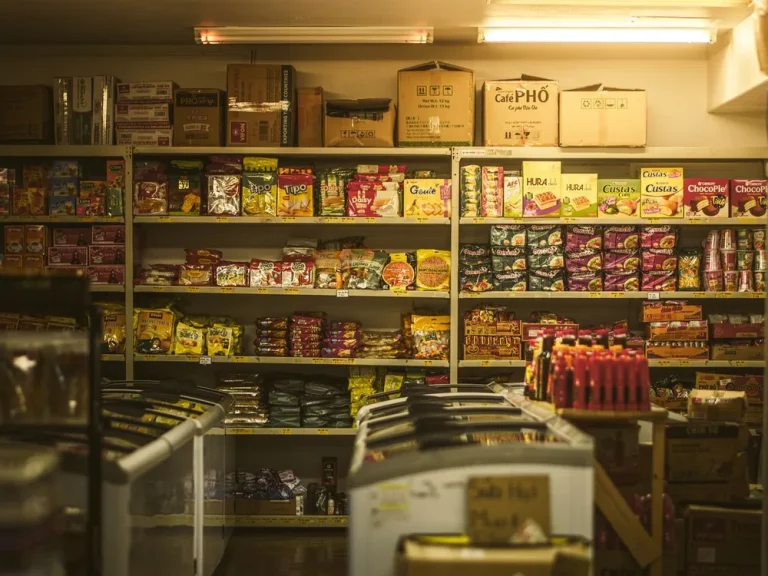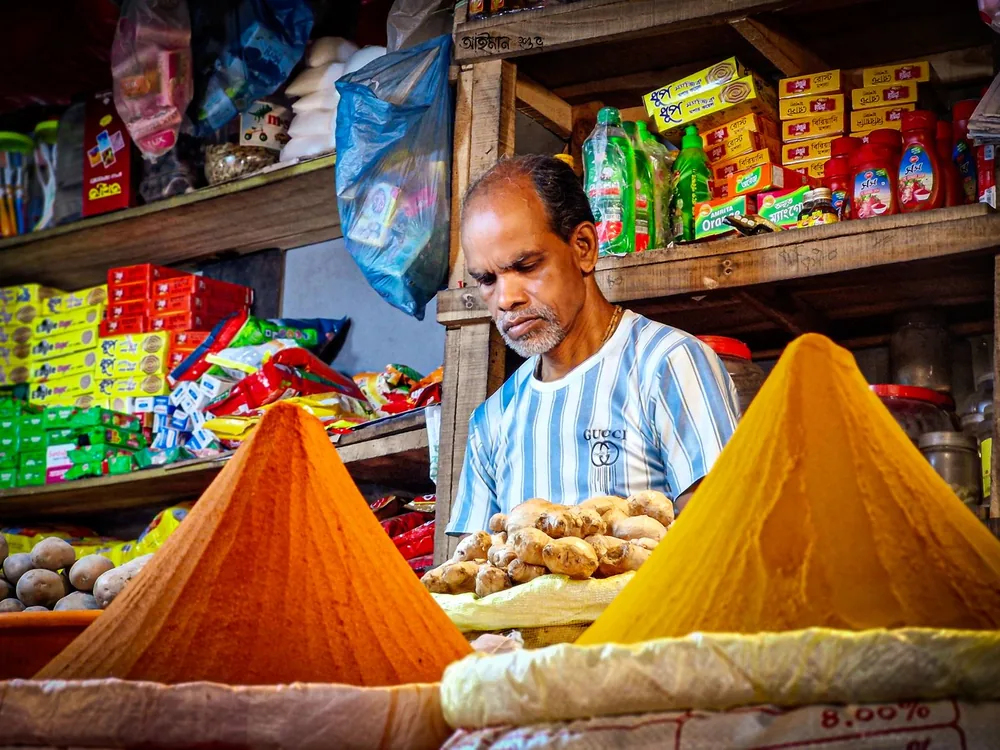
The neighbourhood kiryana store is the backbone of retail in Pakistan. Every mohalla has one or several, selling flour, rice, daal, cooking oil, sugar, tea, soap, biscuits, cold drinks and dozens of daily needs. Demand never stops, because people buy groceries every day. That is what makes a kiryana store attractive as a business. It is also why the margins are thin and competition is close by.
This guide walks through starting a kiryana store business step by step, from location to records. It does not give made-up profit figures; numbers vary too much by area. It focuses on the decisions that make the difference between a shop that grows and one that struggles.
Step 1: Understand the business model
A kiryana store earns a small margin on each item and makes money through volume and repeat customers. Staples such as flour, sugar and cooking oil often carry very small margins and are price-sensitive; customers compare. Packaged snacks, toiletries, household items and cold drinks usually earn more per item. A healthy shop uses staples to bring people in and earns from the wider range they buy while there.
Three things decide success: a good location, tight control of stock and cash, and careful handling of udhaar.
Step 2: Choose the right location
- Residential density: streets with many houses or flats and few nearby shops.
- Footfall: near a mosque, school, bus stop or the main entrance of a colony.
- Competition: some is fine, since it shows demand, but avoid opening right next to a large, well-stocked store.
- Space: enough for shelves, a counter, cold storage and some storage at the back.
- Rent: keep rent affordable relative to the sales the area can support.
Spend a few days observing at different times: morning, after school, evening. Count how many people pass and where they currently shop.
Step 3: Plan your capital
Divide your budget into:
- Setup: advance rent, shelves, counter, lighting, signboard, weighing scale, a fridge or freezer for cold drinks and dairy, and a computer or phone for billing.
- Opening stock: usually the largest share.
- Working capital: cash to restock every week and cover udhaar until it comes back.
- Reserve: rent, electricity and salaries for the first few months.
Many new shops run out of cash not because they lose money, but because too much is tied up in slow stock and udhaar. Keep the reserve separate.
Step 4: Find reliable suppliers
Most kiryana stores buy from a mix of sources: company distributors for branded goods (their order bookers visit regularly), wholesale markets for staples and loose items, and local suppliers for bread, eggs and milk. Compare rates, delivery schedules, minimum orders and credit terms. Distributors often give credit for a week or two; use it carefully. Keep every supplier bill and record each purchase the same day.
Step 5: Build your opening stock carefully
Do not try to stock everything on day one. Start with:
- Daily staples: flour, rice, daal, sugar, oil and ghee, tea, salt, spices.
- Fast-moving packaged goods: biscuits, snacks, noodles, cold drinks, juices.
- Household items: soap, detergent, dishwash, tissues.
- Personal care: shampoo, toothpaste, basic toiletries.
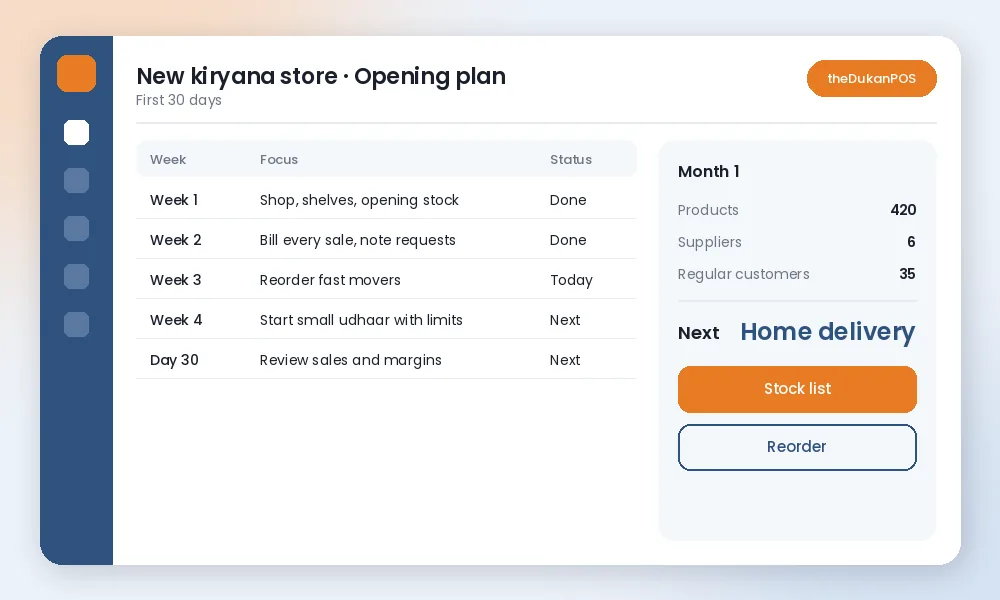
Buy moderate quantities of many items rather than large quantities of a few. Keep a notebook or app list of every item customers ask for that you do not have. After two or three weeks, that list tells you what to add.
Step 6: Set prices sensibly
Customers know the prices of staples and will walk to the next shop over a few rupees. Keep staples competitive and printed-price items at the printed price. Earn your margin on the wider range. Know your cost price for every item so you never sell below cost by mistake. Our free profit margin calculator helps you check margins quickly.
Step 7: Decide your udhaar rules before opening
Credit is expected in most neighbourhoods, and it builds loyalty. It is also the most common reason kiryana stores run short of cash. Decide your rules before the first customer asks:
- Credit only for known regular customers, after a few weeks of cash buying.
- A clear limit per customer.
- A payment day: salary day, the 1st of the month, or weekly.
- Every credit sale written down the same day with the date and amount.
Our guide to udhaar recovery covers this in detail, and our free khata template is a simple way to start.
Step 8: Keep records from day one
Many shopkeepers only realise they need records when something goes wrong. Start correctly: record every sale, every purchase, every credit entry and every expense. Close the cash drawer each night and compare it with the day’s sales. Our guide on how to keep shop accounts explains a simple daily routine.
A POS system makes this automatic. With theDukanPOS, each bill updates stock, udhaar balances and reports; low-stock lists tell you what to reorder; and you can check sales from your phone. See how it works for a grocery and kiryana store.
Step 9: Manage stock every week
- Check expiry dates and move older stock to the front.
- Reorder fast movers before they run out; empty shelves send customers elsewhere.
- Spot slow items and stop reordering them.
- Count high-value items regularly to catch losses early.
Read our stock management tips for a full routine.
Step 10: Hire and train carefully
When you add staff, start with one trusted helper. Teach them prices, how to bill, and your udhaar rules. Give each person their own login or sales record, and check the cash together at closing. Clear routines prevent most problems.
Step 11: Grow steadily
Once the basics run smoothly, consider home delivery within your area, taking orders on WhatsApp (see our WhatsApp guide), adding a small range of fresh items, or opening a second shop. Grow from strength: steady sales, controlled udhaar and reliable records.
Common mistakes new kiryana stores make
- Spending too much on fittings and too little on stock and reserves.
- Giving credit freely in the first weeks to attract customers.
- Not recording small sales and expenses.
- Overstocking slow items because a supplier offered a scheme.
- Mixing household spending with shop cash.
Frequently asked questions
How much money is needed to start a kiryana store in Pakistan?
It depends heavily on the city, the size of the shop, rent and the range you stock. Plan for setup costs, opening stock, working capital for restocking and udhaar, and a reserve for the first few months.
Is a kiryana store profitable?
It can be steadily profitable through volume and repeat customers, but margins on staples are thin. Profit depends on location, stock control, pricing and how well udhaar is managed.
Where do kiryana stores buy stock?
Usually from company distributors for branded products, wholesale markets for staples and loose items, and local suppliers for bread, eggs and milk.
Do I need software for a kiryana store?
You can start with a register, but once you have hundreds of items and many credit customers, a POS with stock and khata saves time and reduces losses.