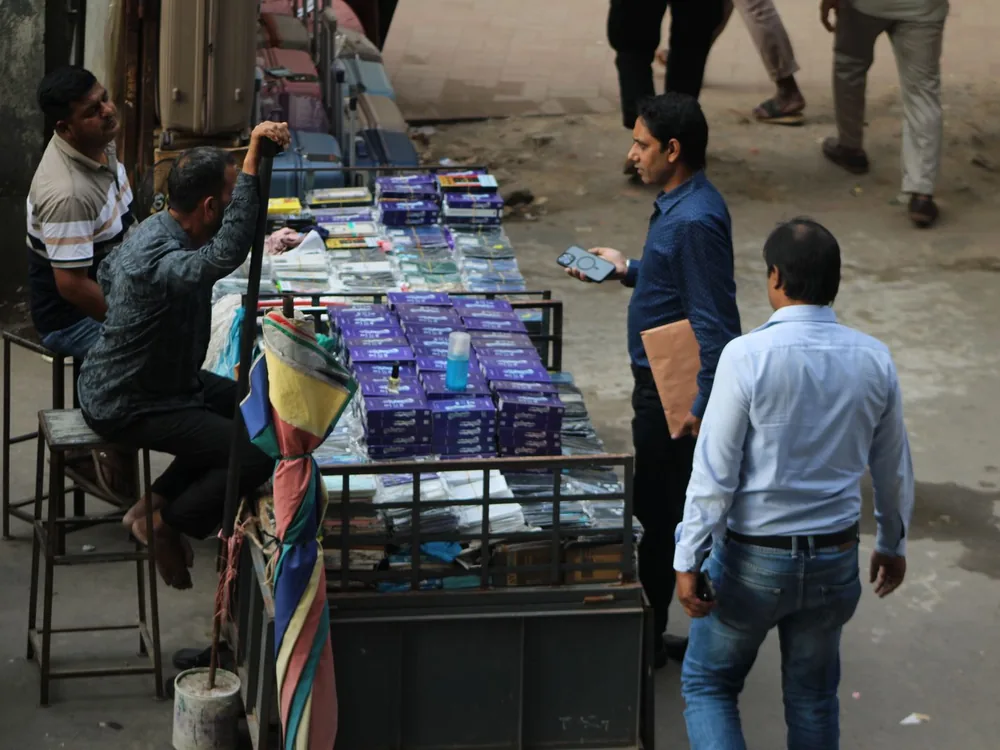
Almost everyone in Pakistan owns a phone, and almost everyone needs a charger, a cover, a screen protector or a repair at some point. That steady demand is why mobile shops are found in every bazaar, plaza and mohalla. It is also why competition is tough. Margins on new handsets are thin, prices change every week, and a shop can look busy while making very little profit.
This guide covers the practical decisions behind a mobile shop business in Pakistan: where to open, what to stock, how to handle PTA-approved phones and used handsets, whether to add repairs, and how to keep stock and cash under control. It avoids made-up figures; your local market decides the numbers.
1. Decide what kind of mobile shop you want
“Mobile shop” covers several different businesses, and each needs different capital and skills:
- Accessories shop: chargers, cables, covers, glass, earbuds, power banks. Lower capital, better margins, fast-moving stock.
- New phone retailer: branded handsets, often through a distributor. High capital, thin margins, relies on volume and trust.
- Used phone dealer: buying and selling second-hand phones. Good margins but needs experience to judge condition and avoid stolen handsets.
- Repair shop: screens, batteries, charging ports, software. Skill-based, with good margins on labour.
- Load and bill payment counter: a small add-on that brings footfall rather than profit.
Many successful shops combine two or three of these, for example accessories plus repairs, so each customer has more than one reason to visit.
2. Choose the location carefully
Mobile markets like Hall Road in Lahore or Saddar in Karachi bring huge footfall but also intense competition and higher rents. A neighbourhood shop has fewer walk-ins but loyal customers and less price pressure. Look for a spot near schools, colleges, offices or a busy bus stop, and watch the street for a few days at different times before signing a lease. Visibility matters: a bright, well-lit display draws people in.
3. Plan your capital
Split your budget into fixed costs (advance rent, counters, display, lighting, signboard, a basic repair bench if needed) and stock. Keep a cash reserve for rent and salaries for the first few months, because new shops rarely earn steadily from day one. A common mistake is spending most of the money on a few expensive phones that sit in the display for weeks while the shop runs short of fast-selling accessories.
4. Stock what actually sells
Accessories usually turn over fastest. Start with a wide range of common items in moderate quantities: chargers and cables for the popular connector types, covers and glass for the best-selling models in your area, basic earbuds and power banks. Watch what customers ask for and what you cannot supply, and adjust every week.
For phones, start with a few popular models in the price ranges your customers buy, rather than many models with one piece each. New models launch constantly, and last season’s stock loses value quickly.
5. Only sell PTA-compliant handsets
In Pakistan, phones must be registered with the Pakistan Telecommunication Authority (PTA) through its Device Identification Registration and Blocking System (DIRBS) to work on local networks. Customers can check a phone’s IMEI status by sending the IMEI number by SMS to 8484 or through PTA’s DIRBS website and app. Before buying stock, especially imported or used phones, check the IMEI status and tell customers clearly whether a handset is PTA-approved. Selling a phone that later gets blocked destroys trust and can lead to disputes.
6. Be careful with used phones
Used phones can be profitable, but they carry risk. Protect yourself:
- Take a copy of the seller’s CNIC and note their phone number.
- Check the IMEI status and make sure the IMEI on the phone matches the box.
- Ask for the original purchase bill where possible.
- Test the screen, battery health, cameras, speakers, charging and fingerprint before agreeing a price.
- Write the IMEI on your purchase and sale records.
A short written buying record with the seller’s details and the IMEI protects you if a phone is later reported stolen.
7. Consider adding repairs
Repairs bring customers back and earn on skill rather than stock. Screen and battery replacements, charging port fixes and software flashing are common jobs. If you add repairs, give customers a job slip with the phone model, the fault, the estimated cost and the expected delivery date, and record the job so it is not forgotten. See our page for repair shops for how to organise job tracking.
8. Price carefully and know your margins
Prices on phones and accessories change often, so check your cost price before quoting. Know the margin on each category: thin on new handsets, healthier on accessories and repairs. Our free profit margin calculator helps you set prices that cover your costs. Avoid giving discounts by habit; a few hundred rupees off every sale adds up to a large amount by month end.
9. Control stock and cash every day
Small accessories are easy to lose track of and easy to steal. Count high-value items such as phones, power banks and branded earbuds daily, and spot-check accessories weekly. Close the cash drawer at the end of each day and compare it with the day’s bills. If staff work at the counter, give each person their own login or sales record so differences can be traced.
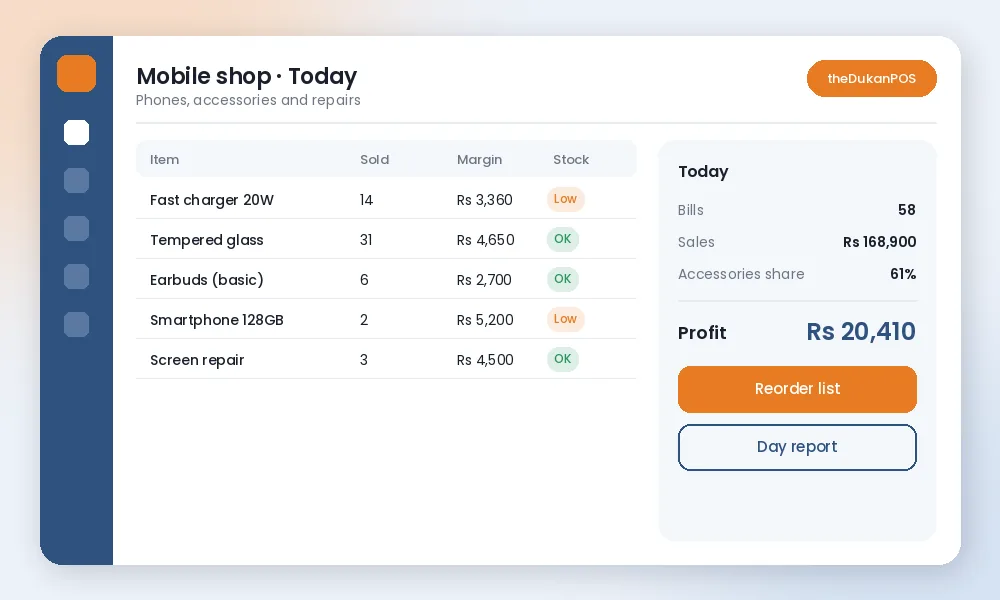
A POS system makes this much easier. With theDukanPOS you can bill quickly with barcode scanning and label printing, see stock levels as you sell, get low-stock lists for reordering, and view daily sales and profit reports from your phone. If you run more than one counter or branch, multi-branch support shows each location separately. Read more on our mobile shop page.
10. Build trust and repeat customers
- Give a printed or shared bill for every sale, with the IMEI written for phones.
- Be clear about warranty: what the manufacturer covers, what you cover, and for how long.
- Keep a WhatsApp Business number for availability questions and repair updates; see our guide to WhatsApp for shop owners.
- Remember regular customers and offer fair prices; word of mouth is the strongest marketing in a mobile market.
Frequently asked questions
Is a mobile shop a profitable business in Pakistan?
It can be, but profit depends on the mix. New handsets usually have thin margins, while accessories and repairs tend to earn more per sale. Most profitable shops combine accessories with phones or repairs.
How do I check if a phone is PTA approved?
Send the phone’s IMEI number by SMS to 8484 or use PTA’s DIRBS website or app. Check the status before buying stock and tell customers clearly.
What should a new mobile shop stock first?
Start with fast-moving accessories such as chargers, cables, covers, screen protectors and basic earbuds, plus a few popular phone models in the price ranges your customers buy.
Do I need software for a mobile shop?
Not on day one, but once you have hundreds of accessories and several phone models, a POS with barcode billing, stock levels and daily reports saves time and reduces losses.